Showing posts with label Novalis. Show all posts

Friday, June 3, 2022

Novalis / Augenblicke (1980)


Germany

Progressive Rock, Symphonic Prog, Art Rock

Novalis decided in 1980 to do justice to the way of working that was then emerging and to change the procedure of songwriting and song creation; that is to say, the joint, night-long working out of the same was a thing of the past. From then on, the musicians wrote their lyrics and music at home for themselves, they met again afterwards to listen to the results (demos) and then to make a selection for further processing. In retrospect, one can say that this approach has had advantages and disadvantages.

One result of the changes were shorter and therefore more compact songs, which can certainly be seen as an act of liberation for the musicians of Novalis...after all, their songs used to last 6 minutes or longer.

On the other hand, as a result, the lightness and looseness was lost a little, and the time for extravagant daydreams was reduced. It was also very clear which musician was behind which song...singer Fred Mühlböck always had a knack for the romantic lyrics and song structures, whereas Lutz Rahn and Detlef Job composed in a completely different, more technical and crisp way.

30 years later, even beginners can still clearly see which musician composed which songs. On the one hand the instrumental songs like the opener "Danmark" or the single release "Cassandra", on the other hand epic, enigmatic and profound pieces like "I haven't learned to love yet" or "As a little boy" that the fans knew, loved and therefore expected from Novalis.

But every band has to be allowed to go through a development process and to change. And all in all, it can be said that this change was worth it. The streamlining has expanded the band's sound, "Augenblicke" has become a fresh and interesting album, entertaining and yet dreamy enough to pause for half an hour and enjoy top-class German-language music.

I say this from the point of view of a music listener who is at home on many construction sites, who has always enjoyed music from home and has always liked to try something new over the years. Perhaps this form of music, the amalgamation of the German language with ballad-like, almost poetic content, is no longer quite up-to-date for today's young audience, but it is precisely in this that one or the other listener may find the appeal of listening to Moments.

I can only recommend trying something different and following other paths, similar to Novalis Anno 1980.

My suggestion to play it is the title "I haven't learned to love yet", the song represents the album very well. Crisp (by Novalis standards) guitar riffs on the one hand and catchy refrains and deep words on the other. Listen for yourself, it's worth it.

Members
Lutz Rahn (organ), Hartwig Biereichel (drums), Heino Schünzel (bass, vocals, 1971-80), Jürgen Wenzel (vocals, 1971-73), Carlo Karges (guitar, 1971-75), Detlef Job (guitar, 1973-85), Fred Mühlböck (vocals, 1976-84), Hinrich Schneider (bass, 1983-85), Ernst Herzner (vocals, 1984-85)

Track Listing

01 - Danmark 3:30
02 - Ich hab' noch nicht gelernt zu lieben 3:30
03 - Cassandra 3:26
04 - Herbstwind 4:46
05 - Mit den Zugvögeln 3:16
06 - Sphinx 3:25
07 - Als kleiner Junge 5:16
08 - Magie einer Nacht 3:55
09 - Begegnungen 4:47

Thursday, June 2, 2022

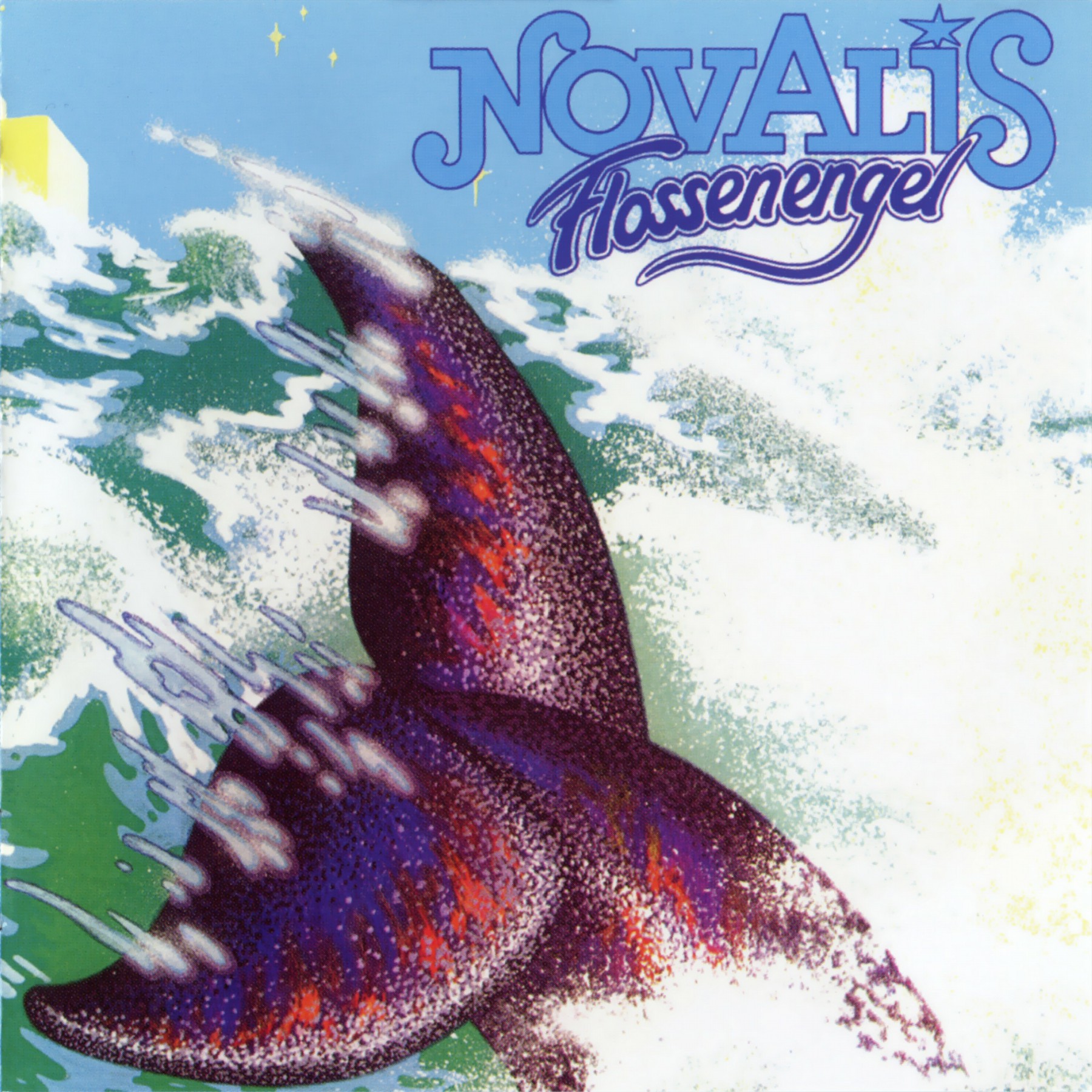
Novalis / Flossenengel (1979)


Germany

Progressive Rock, Symphonic Prog, Art Rock

At the helm of the oceanic wind, lapped by lukewarm spray, a blinded fisherman stares in the face of his catch. "An angel with fins," marvels the fisherman, "a star sparkling in chains. Seeing his form," the fisherman trembles, "is like turning darkness into light."
"From what ultimate paradisiacal depths does your splendor penetrate our circle? From what raw wildness does your pride shine so unbroken in being conquered?" ...etc. (from "Flossenangel")

Flossenengel, the concept album by the German and Krautrock band Novalis, released on the Brain label in 1979, was recently reissued by the MIG (Made In Germany) label in a sound-perfect remastered version and now offers all those interested the opportunity to purchase a sought-after masterpiece of German music available at an affordable price. The concept on which the record is based refers to the topic of whaling and nature conservation, which is still relevant today (a whale named Atlanto is caught and later remorsefully released by the fisherman).
Far more interesting than this concept, however, is its musical realization. The band, already known as rock poets for processing old works by the writer and philosopher Novalis (Georg Philipp Friedrich Freiherr von Hardenberg, 1772-1801), strengthened themselves in 1976 with the Austrian singer Fred Mühlböck. A stroke of luck, as it turned out later, because his charismatic demeanor and above all his singing skills made not only the live performances of the band unique, but also the studio productions.

Novalis newcomers may initially have difficulty immersing themselves in the world of Flossenengel, but once they get over the instrumental intro, which from today's perspective certainly seems kitschy (including the then highly innovative whale song), a wonderful, sad but sensitive story about the whale opens up for the listener Atlanto. Too petty record critics have been lamenting since the release of the disc that a whale has no scales and of course cannot speak either, but if you generously ignore such stylistic aberrations, more than 30 years after its creation there remains a fresh work that is also more than worth discovering. Incidentally, Novalis supported the WWF (World Wildlife Fund), founded in 1961, with this album and the subsequent spectacular stage shows.

Lutz Rahn (Hammond, keyboards) said about the LP in 1980: "With Flossenengel we made a record that dealt with the relationship between nature and humans. Man is strongly linked to his natural environment. If he destroys them, and he is well on the way to doing so, he will deprive himself of his livelihood. We want to use this campaign to draw attention to this problem.”

Musically, the band walks on well-known folky-progig paths, Lutz Rahn's keyboard and Hammond clouds waft spherically through the 46 minutes and spread a wide variety of moods. Basically, however, the strong guitar work of Detlef Job on the foundation of bassist Heino Schünzel and drummer Hartwig Biereichel dominates. Depending on the mood, Mühlböck's accordion and sometimes a flute join in, giving the album a pleasant tonal breadth.

Ultimately, I can only make one recommendation to all tolerant people interested in German-language music: Just risk buying an album from a time when today's green politics were still in their infancy and rubber truncheons were on the heads of young Greenpeace activists and nuclear power plants -Opponents danced. Flossenengel definitely wants to be understood as a protest against environmental destruction and overexploitation by humans.

That's not the only reason why the record is more relevant today than ever.

Members
Lutz Rahn (organ), Hartwig Biereichel (drums), Heino Schünzel (bass, vocals, 1971-80), Jürgen Wenzel (vocals, 1971-73), Carlo Karges (guitar, 1971-75), Detlef Job (guitar, 1973-85), Fred Mühlböck (vocals, 1976-84), Hinrich Schneider (bass, 1983-85), Ernst Herzner (vocals, 1984-85)

Track Listing

01 - Atlanto 5:12
02 - Im Brunnen der Erde 4:28
03 - Brennende Freiheit 2:20
04 - Im Netz 8:38
05 - Flossenengel 3:26
06 - Walzer für einen verlorenen Traum 3:27
07 - Sklavenzoo 6:00
08 - Alle wollen leben 4:45
09 - Rückkehr 6:00
10 - Ob Tier, ob Mensch, ob Baum 1:50


Wednesday, June 1, 2022

Novalis / Vielleicht bist du ein Clown? (1978)


Germany

Progressive Rock, Symphonic Prog, Art Rock

It's the album where Novalis' music literally shifts in a different direction. It has similarities with the transition stage album Brandung. It has a different feel compared to the first albums. A different and interesting Novalis album, albeit not as good as them.

Members
Lutz Rahn (organ), Hartwig Biereichel (drums), Heino Schünzel (bass, vocals, 1971-80), Jürgen Wenzel (vocals, 1971-73), Carlo Karges (guitar, 1971-75), Detlef Job (guitar, 1973-85), Fred Mühlböck (vocals, 1976-84), Hinrich Schneider (bass, 1983-85), Ernst Herzner (vocals, 1984-85)

Track Listing

01 - Der Geigenspieler 8:14
02 - Zingaresca 5:12
03 - Manchmal fällt der Regen eben lang 3:50
04 - Vielleicht bin ich ein Clown? 6:22
05 - City-Nord 6:07
06 - Die Welt wird alt und wieder jung 4:30


Tuesday, May 31, 2022

Novalis / Konzerte (1977)


Germany

Progressive Rock, Symphonic Prog, Art Rock

This concert album, which is the first place Fred Mühlböck was seen with Novalis, is the most important source explaining the transition to the new era Novalis. Although at some points it seems like they are playing the recordings on the album one-on-one, it was a concert recording that highlighted the talents of the band members.

Members
Lutz Rahn (organ), Hartwig Biereichel (drums), Heino Schünzel (bass, vocals, 1971-80), Jürgen Wenzel (vocals, 1971-73), Carlo Karges (guitar, 1971-75), Detlef Job (guitar, 1973-85), Fred Mühlböck (vocals, 1976-84), Hinrich Schneider (bass, 1983-85), Ernst Herzner (vocals, 1984-85)

Track Listing

01 - Bolero 0:51
02 - Dronsz 2:41
03 - Es färbte sich die Wiese grün 9:04
04 - Impressionen 10:00
05 - Wer Schmetterlinge lachen hört 9:14
06 - Wunderschätze 11:33
07 - Sommerabend 19:19
a. Wetterleuchten
b. Am Strand
c. Der Traum
d. Ein neuer Tag
e. Ins Licht


Monday, May 30, 2022

Novalis / Brandung (1977)


Germany

Progressive Rock, Symphonic Prog, Art Rock

In late 1976, guitarist, flutist and singer Fred Mühlböck joined Novalis. Mühlböck contributed a lot to Novalis with this participation. The Brandung album was so successful that it sold 100,000 copies in a few months. Because the Novalis era until the Somerabend album was over and a new Novalis style emerged. Especially the song Sonnenwende, which covers the B side of the record, has turned into an incredibly beautiful legend with its magnificent vocals and depressive Hammond touches.

Members
Lutz Rahn (organ), Hartwig Biereichel (drums), Heino Schünzel (bass, vocals, 1971-80), Jürgen Wenzel (vocals, 1971-73), Carlo Karges (guitar, 1971-75), Detlef Job (guitar, 1973-85), Fred Mühlböck (vocals, 1976-84), Hinrich Schneider (bass, 1983-85), Ernst Herzner (vocals, 1984-85)

Track Listing

01 - Irgendwo, irgendwann 4:35
02 - Wenn nicht mehr Zahlen und Figuren 3:03
03 - Astralis 8:50
04 - Sonnenwende
a. Brandung 3:42
b. Feuer bricht in die Zeit 3:56
c. Sonnenfinsternis 3:30
d. Dämmerung 5:48


Sunday, May 29, 2022

Novalis / Sommerabend (1976)


Germany

Progressive Rock, Symphonic Prog, Art Rock

Novalis' third studio album. Better than the first two albums. Even more progressive and more symphonic. It has a different atmosphere. As you listen, you want to listen to it over and over again. Perhaps one of the best progressive rock albums of the period.

Members
Lutz Rahn (organ), Hartwig Biereichel (drums), Heino Schünzel (bass, vocals, 1971-80), Jürgen Wenzel (vocals, 1971-73), Carlo Karges (guitar, 1971-75), Detlef Job (guitar, 1973-85), Fred Mühlböck (vocals, 1976-84), Hinrich Schneider (bass, 1983-85), Ernst Herzner (vocals, 1984-85)

Track Listing

01 - Aufbruch 9:37
02 - Wunderschätze 10:37
03- Sommerabend
a. Wetterleuchten 3:50
b. Am Strand 4:20
c. Der Traum 3:50
d. Ein neuer Tag 4:25
e. Ins Licht 1:52


Saturday, May 28, 2022

Novalis / Novalis (1975)


Germany

Progressive Rock, Symphonic Prog, Art Rock

Immersed in an imaginary that refers to a certain nineteenth-century romanticism, the Novalis come with the second record to define their proposal of symphonic Prog dominated by keyboards, not without merits but also, to tell the truth, decidedly dated and at times a bit cloying. The instrumental pieces are good, in particular Sonnengeflecht and, above all, Impressionen (which mentions Anton Bruckner's fifth symphony and which evokes some emotion). They will do much better, and in a more original way, on their third album, Sommerabend.

Members
Lutz Rahn (organ), Hartwig Biereichel (drums), Heino Schünzel (bass, vocals, 1971-80), Jürgen Wenzel (vocals, 1971-73), Carlo Karges (guitar, 1971-75), Detlef Job (guitar, 1973-85), Fred Mühlböck (vocals, 1976-84), Hinrich Schneider (bass, 1983-85), Ernst Herzner (vocals, 1984-85)

Track Listing

01 - Sonnengeflecht 4:06
02 - Wer Schmetterlinge lachen hört 9:16
03 - Dronsz 4:53
04 - Impressionen 8:55
05 - Es färbte sich die Wiese grün 8:16


Friday, May 27, 2022

Novalis / Banished Bridge (1973)


Germany

Progressive Rock, Symphonic Prog, Art Rock

In the process that started towards the end of the 60s, the alternative segment outside of popular music was pioneered by Psychedelic in America, Progressive in England and Krautrock in Germany. Naturally, it didn't take long for the species to get to know and discover each other. Novalis, one of the bands that discovered the British Progressive at the very beginning of the 70s, provided the emergence of the German progressive and symphonic rock, without straying too far from the heavy, melodic Krautrock, but especially by staying outside.
Of course, the genre was more British in the first album. But Novalis music, which turned into a symphonic rock nourished by German folk culture with successive albums, had a structure of its own. This first album, which is our subject, has great differences with Sommerabend, which can be considered as a Novalis masterpiece, which we plan to add later. While the British attitude and style that we have just mentioned is hardly felt in other albums, you can make people who do not know Banished Bridge pass it off as "the British made it".

In this first album of the group consisting of 4 people, especially the first track, Banished Bridge, carries some forced tones of vocalist Jürgen Wenzel, but is very satisfying in terms of instruments. Lutz Rahn's Hammond timbres, reminiscent of Emerson, Lake & Palmer from time to time, carry the album upwards in many places.

The second piece has a variable structure, as if to salute the meaning called High Evolution. It is a very interesting structure with its ups and downs, enthusiasm and the stagnation that follows. With its style reminiscent of The Strawbs influences, it is a candidate to be the favorite of many people in the album.

Laughing, which moves along with the delicious percussions of Biereichel and differentiates with the keys of Rahn, deserves attention with its melodic structure. Although it slips in many different directions, the piece manages to return to the main theme every time and turns into an aesthetic work that is very pleasing to listen to.

The last track of the album, Inside of Me, is the most important track that Rahn took control of by stepping forward from Wenzel. The piece is also the predecessor of the future Novalis style. It allows us to have more or less an idea of ​​what awaits us in the future.

Members
Lutz Rahn (organ), Hartwig Biereichel (drums), Heino Schünzel (bass, vocals, 1971-80), Jürgen Wenzel (vocals, 1971-73), Carlo Karges (guitar, 1971-75), Detlef Job (guitar, 1973-85), Fred Mühlböck (vocals, 1976-84), Hinrich Schneider (bass, 1983-85), Ernst Herzner (vocals, 1984-85)

Track Listing

1. Banished Bridge (17:06)
2. High Evolution (4:27)
3. Laughing (9:10)
4. Inside of Me (Inside of You) (6:40)